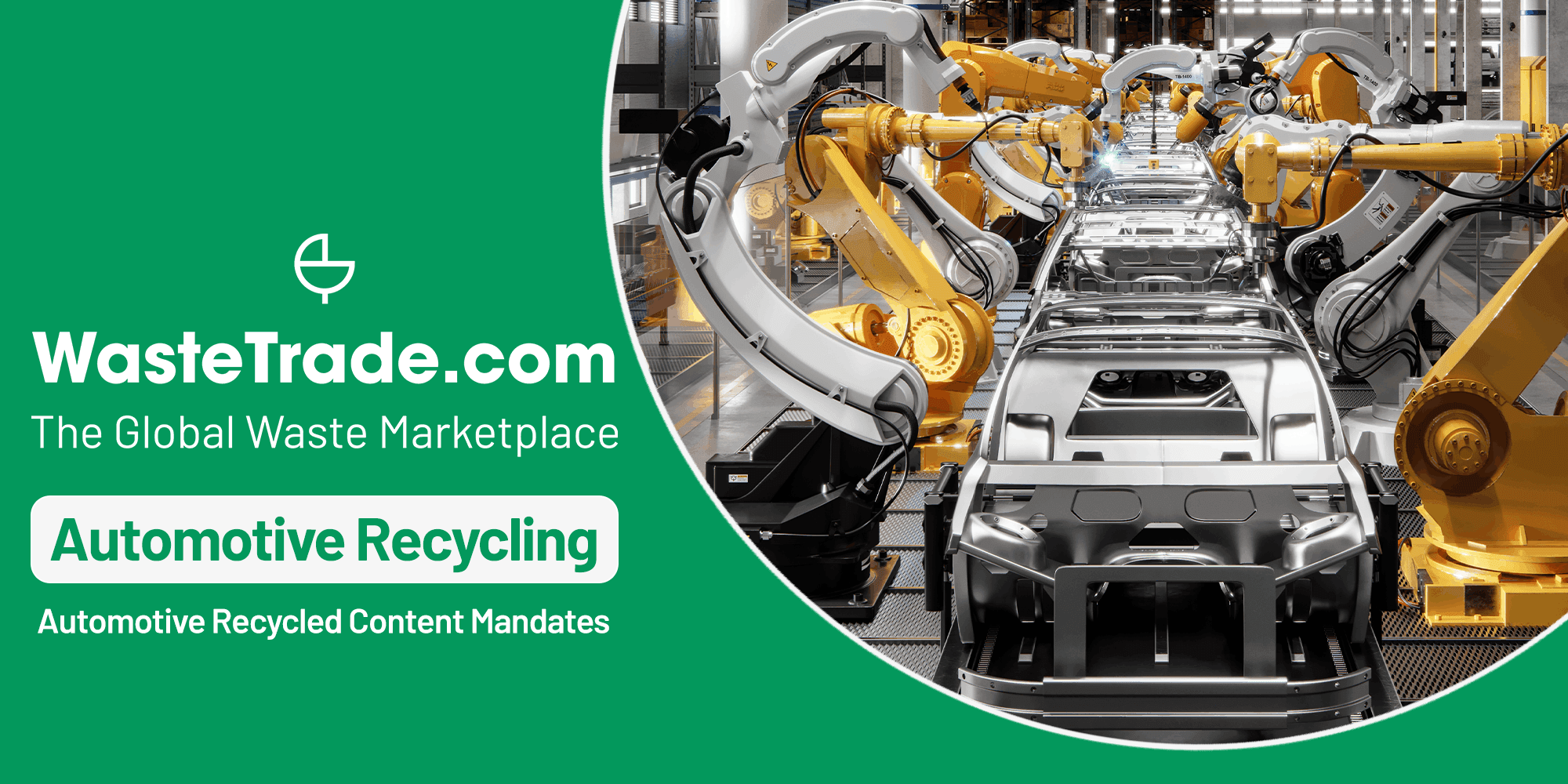
The EU is pushing ahead with a major shift in automotive recycling policy. A provisional agreement on new End-of-Life Vehicles rules will introduce mandatory recycled plastic content in new vehicles sold across Europe. The structure is clear. Carmakers will need to reach 15% recycled plastic content within six years, rising to 25% after ten years. A defined share of that must come from plastics recovered from end-of-life vehicles or parts removed during use.
This matters because it moves recycled plastic in automotive manufacturing out of the voluntary space and into compliance. It is no longer about sustainability targets or marketing claims. It becomes a requirement tied to how vehicles are built and sold in the European market.
Automotive Recycling Demand Meets Reality
The scale of this shift is hard to ignore. The automotive sector consumes roughly 6 million tonnes of plastics each year in Europe. At the same time, automotive recycling still struggles to recover plastic at meaningful quality. Only a small share of plastics from end-of-life vehicles returns to use, with most value still concentrated in metals.
That creates a clear imbalance. Demand for recycled automotive plastics is about to increase in a structured way, while supply remains inconsistent, fragmented and often technically unsuitable for high-spec applications.
This is where the story becomes commercial. Automotive recycling is not short of material in volume terms. It is short of material that meets specification, performs consistently and can be traced back to a credible source.
Bottle Recycling Meets Automotive Use
Recycled plastics already flow through established markets such as bottle recycling, where PET, HDPE and PP streams are widely collected and processed. Those bottle-grade recycling systems have built scale, sorting capability and established standards over time.
Automotive plastics sit in a different position. Vehicles contain complex polymer mixes including PP, ABS and engineered compounds used in trims, housings and structural components. These materials face higher performance demands and tighter tolerances.
The new EU rules begin to bridge that gap. They create a regulatory link between post-consumer plastic waste, including streams that overlap with bottle recycling, and high-value automotive applications. That link does not automatically solve the technical challenges. It does, however, create a stronger incentive to upgrade material quality and traceability across recycling systems.
Design, Dismantling, Recovery
The policy is not limited to recycled content targets. It also pushes design for recycling, improved dismantling and better end-of-life processing. That matters because automotive plastics are often lost in mixed shredder streams, where recovery becomes difficult and value drops quickly.
If vehicles remain hard to dismantle and plastics remain mixed and contaminated, the supply of automotive-grade recyclate will not keep up with mandated demand. The regulation recognises that and attempts to address the full lifecycle, from design through to recovery.
Quality, Availability, Proof
Three constraints define the real market challenge.
Quality comes first. Automotive components must meet strict requirements for durability, impact resistance, finish and consistency. Not all recycled plastics can meet those standards, especially when derived from mixed or poorly sorted waste.
Availability follows. Even where suitable material exists, volumes remain uneven. Automotive recycling does not yet deliver a stable, scalable flow of high-quality plastic comparable to metals recycling.
Proof is the third factor. As recycled content becomes a compliance issue, manufacturers need clear evidence of origin, processing route and material characteristics. Documentation and traceability move from background detail to commercial necessity.
Chemical Recycling Enters The Frame
The EU framework allows chemically recycled plastics to contribute through mass-balance accounting. This opens the door for more complex waste streams to enter the automotive supply chain, including plastics that cannot be handled through conventional mechanical recycling.
That said, this is not a free pass. Mass balance requires defined methodology and verification. The direction remains towards tighter control of how recycled content is measured and attributed, not looser claims.
Automotive Recycling Gets Harder
Automotive remains one of the most demanding end markets for recycled materials. Carmakers and suppliers do not change material specifications lightly. Validation cycles take time. Approval processes are strict. Performance and safety expectations are high.
This means the shift will not happen overnight. Even with clear regulatory direction, the adoption of recycled plastics in vehicles will build gradually. Early progress will likely focus on non-safety-critical applications where recycled PP, ABS and similar materials can meet requirements without major redesign.
Why Traceable Recycling Matters
As recycled content becomes mandatory, the economics of automotive recycling begin to change. Material that is loosely specified or poorly documented becomes harder to use. Material that is consistent, well-described and traceable becomes more valuable.
This is where the market starts to shift. The question is no longer just whether recycled plastic is available. It is whether it can be trusted to meet technical standards and compliance requirements at scale.
Where WasteTrade Fits
WasteTrade sits directly in this space. The platform is built around structured trading of recyclable materials, with an emphasis on verified participants, clear specifications and operational transparency.
For automotive manufacturers and suppliers, that matters. Sourcing recycled plastics for vehicle production requires more than volume. It requires confidence in the counterparty, clarity on material characteristics and a reliable route from listing to delivery.
WasteTrade enables buyers to filter and source materials based on specification, location and quantity, while connecting them with vetted sellers. It also supports the logistics and documentation that sit behind cross-border material flows.
In a market shaped by regulation, that structure becomes more important. Automotive buyers need to know what they are buying, where it comes from and whether it can stand up to internal and external scrutiny.
From Useful To Essential
The tighter the recycled-content rules become, the less room there is for informal or opaque trading. Compliance raises the cost of getting sourcing wrong. It also raises the value of platforms that bring clarity and discipline to material transactions.
WasteTrade does not replace technical qualification. It does something equally important. It helps create cleaner, more reliable access to recyclable materials that are described properly and traded transparently.
As automotive recycling moves closer to compliance-driven demand, that role shifts from useful to increasingly important.
Preparing For Automotive Recycling Demand
The timeline matters. Six years to the first target and ten years to the second may sound long, but automotive supply chains move slowly. Material approvals, supplier onboarding and production changes take time.
Businesses that want to supply into automotive recycling markets need to prepare now. That means improving sorting, upgrading processing, tightening specifications and building traceable supply chains. It also means finding reliable routes to market where material can be traded with confidence.
The Direction Of Travel
The EU is setting a clear direction. Recycled plastic in vehicles is moving from a sustainability ambition to a regulated requirement. That change will reshape how automotive plastics are sourced, processed and traded.
For the recycling sector, the opportunity is significant but not automatic. Demand will grow, but only for material that meets the standards automotive manufacturing requires.
For WasteTrade, the relevance is straightforward. As the market shifts towards quality, reliability and traceability, platforms that support structured, transparent material trading become more valuable.
The real question is not whether automotive recycling demand will increase. It is whether the supply chain can deliver material that is good enough and provable enough to meet it.