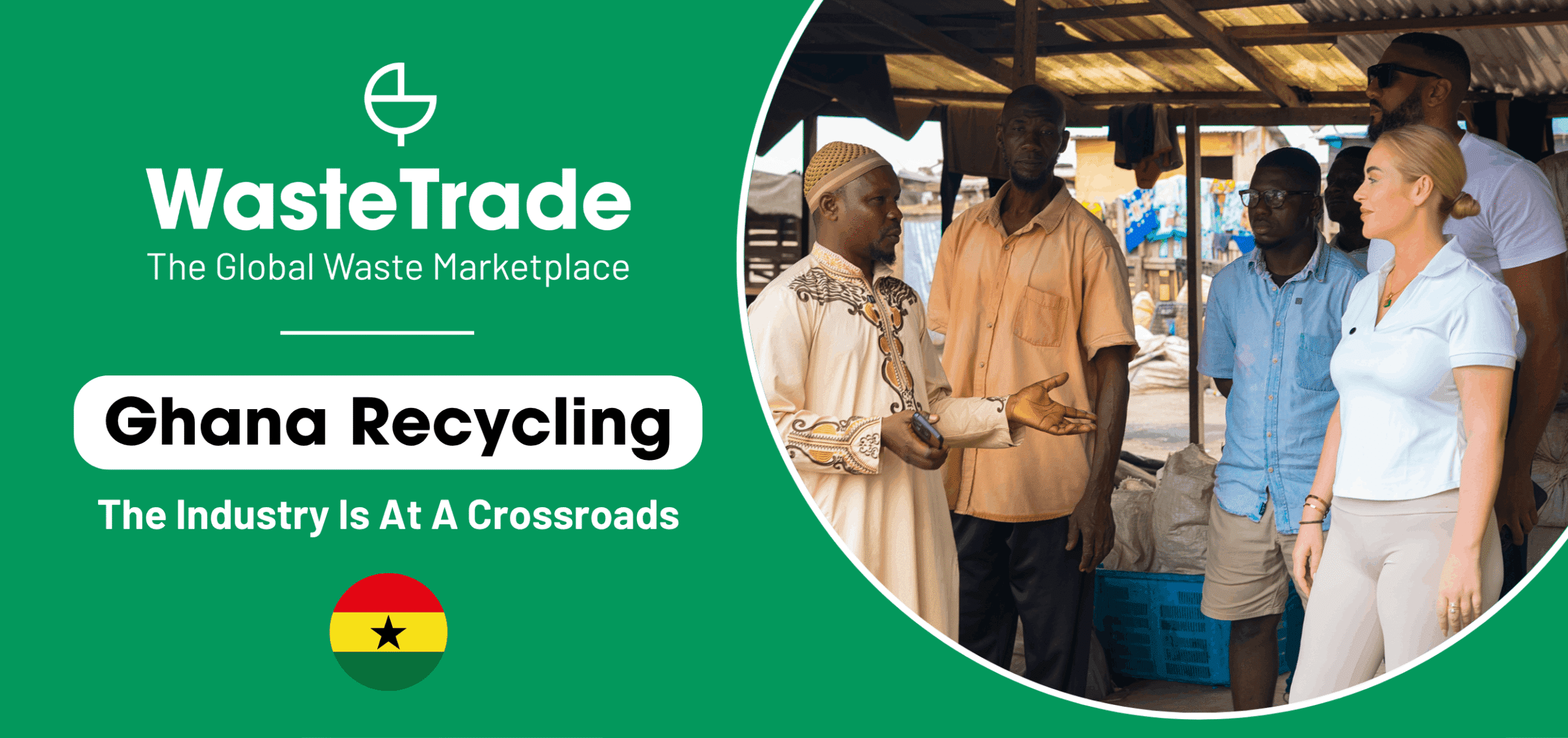
Ghana recycling is approaching a decisive year. The country generates around 1.1 million tonnes of plastic waste annually, yet only a small share enters formal recycling channels. The figure often cited is around 5% collected for recycling, but even that does not mean 5% becomes usable recycled feedstock. Material can be collected, then lost through contamination, poor sorting, weak logistics or lack of demand.
That is the central problem. Ghana does not lack recyclable material. It lacks enough of the systems needed to turn that material into consistent, specified and tradeable supply. In 2026, that gap will become harder to ignore. The EU’s new waste shipment rules will restrict plastic waste exports to non-OECD countries. Ghana’s Extended Producer Responsibility framework is moving closer to practical implementation. Planned restrictions on polystyrene foam packaging show a tougher domestic policy direction. Ghana has also been designated as a West Africa regional hub for waste management and resource circularity.
These developments point to the same conclusion: Ghana’s recycling market needs structure. WasteTrade Ghana sits within that shift, helping recyclable materials move from fragmented supply into verified, documented and commercially workable trade.
Ghana Recycling and the Plastic Waste Gap
The scale of Ghana’s plastic waste should make the country one of West Africa’s most important recycling markets. In theory, 1.1 million tonnes of plastic waste a year represents a significant feedstock base for recyclers, processors, manufacturers and investors.
In practice, too much material leaks out of the value chain. Some plastic never reaches a collector. Some gets burnt or buried. Some moves through informal recovery routes without quality grading, documentation or buyer visibility. Some reaches aggregators but cannot be sorted, washed or transported at a workable cost.
This creates a contradiction: recyclable material exists in volume, but processors and buyers still struggle to secure consistent supply at reliable specification.
Collection alone will not fix that. A working recycling market needs sorting, aggregation, storage, transport, quality assurance, transparent pricing, secure payment and trust between counterparties. Without those links, plastic waste remains a cost. With them, it becomes feedstock.
Why 2026 Changes the Market
Ghana is not entering 2026 with one policy change to manage. Several pressures are arriving together.
The EU’s new waste shipment rules will prohibit plastic waste exports to non-OECD countries from November 2026. Ghana sits within the group affected by that change. Not every Ghanaian recycler depends on European material, but any business that has used EU-origin plastic waste as part of its feedstock mix will need to adapt.
The wider signal is more important than the trade route itself. The old model of moving waste from high-consumption regions into lower-cost processing destinations faces heavier scrutiny. Compliance, traceability and domestic recovery capacity now matter more.
For Ghana, this creates pressure and opportunity. Imported feedstock may become less dependable, but the country already generates large volumes of plastic waste. The task now is to capture more of it, sort it better and move it through formal channels into productive use.
Ghana’s developing Extended Producer Responsibility framework points in the same direction. EPR asks companies that place packaging on the market to take greater responsibility for what happens after use. That means more attention on recyclability, recovery, reporting and evidence.
Planned restrictions on polystyrene foam food containers add another signal. A ban on one material will not solve Ghana’s plastic waste challenge, and poor substitutions could create new problems. Businesses will need to understand whether alternative materials can be collected, sorted, traded and processed.
The direction is clear. Ghana’s recycling market is moving into a period where informal, undocumented and poorly specified material flows will face greater limits.
WasteTrade Ghana and the Missing Middle
The most important gap in Ghana recycling is the missing middle.
At one end, households, businesses, manufacturers, retailers, ports, construction sites and industrial facilities generate waste. At the other, recyclers, processors and manufacturers need usable material. Between those two ends sits the hard part: segregation, aggregation, grading, storage, logistics, documentation, pricing and trust.This missing middle determines whether material flows or stalls.
WasteTrade Ghana operates in that space. It helps make recyclable materials discoverable. It gives sellers a route to buyers beyond informal local networks. It gives buyers a way to identify supply. It supports logistics coordination and reduces uncertainty around counterparties. It helps recyclable material move as a commodity rather than as an afterthought.
This matters because plastic recycling is not one market. PET bottles, HDPE containers, LDPE film, PP packaging and rigid plastics each require different handling and attract different buyers. A market that treats plastic as one undifferentiated category loses value. A market that identifies and trades material properly creates better outcomes.
WasteTrade Ghana cannot build every collection point, sorting facility or recycling plant. But it can help those assets work better by connecting them to supply, demand and logistics. Ghana does not only need more recycling infrastructure. It needs that infrastructure to sit inside a working market.
West Africa Recycling and Circular Trade
Ghana’s designation as a West Africa regional hub for waste management and resource circularity raises the stakes. The country’s recycling future is no longer only domestic.
Across West Africa, cities face rising plastic consumption, fragmented recovery networks, limited sorting capacity and growing pressure to improve waste management. Ghana has an opportunity to help shape the regional response, but leadership must move beyond policy language. It needs systems that can move material, support trade and make recycling commercially dependable.
WasteTrade Ghana gives that regional ambition a practical trading dimension. With Ghana’s logistics position, Tema’s importance and the country’s growing policy profile, there is a clear case for stronger circular trade routes between Ghana, neighbouring markets and international buyers.
The point is not for Ghana to become a dumping ground for regional material. The point is for Ghana to become a better organised centre for verified circular trade, where recyclable commodities move through clearer and more accountable channels.
This is also an investment case. Ghana needs aggregation hubs, sorting capacity, washing lines, flake production, logistics services, collection partnerships and offtake relationships. These are commercial opportunities as much as policy requirements.
Investment follows confidence. A processor wants supply security. A buyer wants quality. A producer wants recovery evidence. A haulier wants predictable movement. By improving market visibility, WasteTrade Ghana helps strengthen those conditions.
What Comes Next for Ghana Recycling
Businesses in Ghana should treat 2026 as a preparation year, not a distant policy milestone.
Waste generators should map the materials they produce, including polymer types, volumes, contamination risks and current disposal routes. Manufacturers and packaging users should assess whether their materials could face higher EPR costs, reputational pressure or future restrictions. Recyclers and processors should strengthen supply relationships, improve material specification and prepare for a market in which documentation matters more. Hauliers should position themselves for organised movement of recyclable commodities rather than irregular one-off loads.
WasteTrade Ghana gives these businesses a practical route into the next phase. Waste generators can list recyclable materials. Buyers can source feedstock. Recyclers can find supply and customers. Hauliers can participate in organised material movement.
Ghana recycling now stands at a defining crossroads. The country has material in volume, policy momentum and regional status. It also has a serious gap between what recycling could become and what the current system can reliably deliver.
The work now lies in systems: collection, sorting, quality, logistics, verification, documentation, trade and trust. WasteTrade Ghana is helping build that market layer, connecting credible counterparties and supporting more transparent movement of recyclable materials across Ghana and the wider region.
Ghana’s recycling future will belong to the businesses, processors, policymakers and trading partners that move early, organise properly and treat waste not as a disposal problem, but as material waiting for a better route back into use.