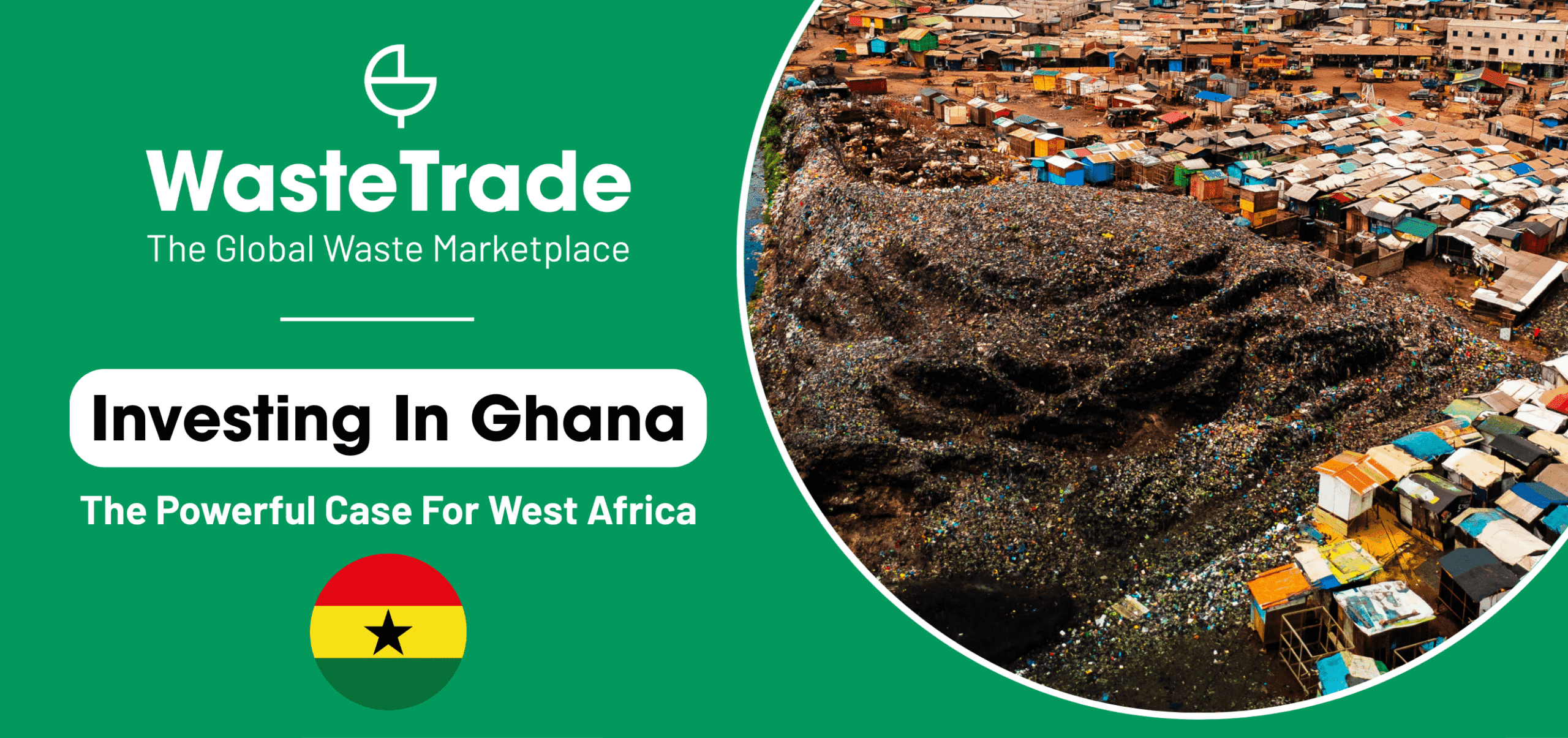
Ghana recycling investment is becoming one of the more serious circular economy opportunities in West Africa, not because the market is already mature, but because the foundations for formal growth are now visible. Collection remains fragmented, processing capacity varies widely, and too much recoverable material still falls out of formal value chains. Yet those weaknesses are also where the commercial case begins.
Ghana has waste volumes, port access, policy momentum and an entrepreneurial recycling base. What it still needs is the operating infrastructure that turns recovered material into reliable, documented and tradeable secondary raw material. That is where WasteTrade Ghana matters.
For investors, recyclers and manufacturers looking at West Africa, Ghana deserves closer attention. It combines relative political stability, a functioning democratic system, a growing consumer market, a coastline with major logistics advantages and an increasingly active circular economy policy environment. In a region where recycling potential often struggles to move beyond promise, that mix carries weight.
Ghana Recycling Investment Needs A Different Lens
Waste is still too often treated as a municipal burden. In Ghana, public discussion naturally focuses on plastic leakage, landfill pressure, informal collection and the strain placed on local authorities. Those challenges are real, and they should not be softened.
But they are not the whole story.
Research from Ghana’s Institute of Statistical, Social and Economic Research has projected that strategic waste management could generate up to USD 4.5 billion annually by 2032, across recycling, compost production and waste-to-energy. That figure matters because it changes the frame. Waste management in Ghana is not only an environmental cost. Handled properly, it can become a source of industrial value, employment, export earnings and regional competitiveness.
The investment case sits between ambition and execution. Ghana does not simply need more discussion about circular economy principles. It needs practical systems that turn plastic, rubber and other recoverable materials into commodities buyers can trust.
That means sorting, washing, aggregation, testing, documentation, logistics, verified counterparties and secure payments. WasteTrade’s platform and Ghana operations sit directly in that space.
Why Ghana Stands Out In West Africa
Ghana has four structural advantages that many neighbouring markets do not hold in the same combination.
The first is political stability. Ghana has economic pressures, and no serious investor would ignore them, but its democratic continuity and institutional credibility support longer-term planning. Recycling infrastructure takes time. Supply chains have to mature. Processors need training, contracts and confidence. Buyers need assurance that material can move consistently and lawfully.
The second advantage is policy direction. The Ghana Circular Economy Centre project, backed by UNIDO, is expected to support Ghana’s shift from a linear economy towards a more circular model. Its focus on waste hotspots, value leakage and bankable circular opportunities is especially relevant. The best policy frameworks do not only describe environmental targets. They help identify where commercial action can unlock value.
The third advantage is logistics. Tema Port gives Ghana a physical gateway that many West African markets cannot match. Recycling is not only about what can be collected. It is about what can be moved, documented and sold.
The fourth advantage is domestic demand. Ghana’s growing consumer market creates more waste, but it also creates future demand for recycled content in packaging, construction, manufacturing and consumer goods. Investors need feedstock and end-market potential. Ghana has both, provided the right trading and quality systems sit between them.
Tema Port And West Africa Recycling Logistics
Tema is central to the Ghana recycling investment case because logistics decide whether recovered material can become a serious commodity. A bale, flake, regrind or crumb product has limited value if it cannot move through a compliant and commercially workable route.
WasteTrade Ghana’s activity around Tema shows why this matters. The operation supports verified, Basel-compliant exports of plastics and rubber from Ghanaian recyclers to international buyers. Materials such as PET, HDPE, LDPE film, PP big bags and tyre crumb are the kinds of streams that can help Ghana move from fragmented recovery into structured circular trade.
There is also a strong transport logic. Containers that bring goods into Ghana do not need to leave empty. With the right documentation, supplier checks and quality control, reverse shipping can move verified recycled materials from Tema into international markets. That gives Ghana a practical commercial advantage, not just a geographical one.
Tema gives Ghana the physical gateway. WasteTrade adds the digital, commercial and compliance layer that helps recyclers use it properly.
WasteTrade Ghana And Formal Circular Trade
WasteTrade Ghana officially launched after receiving its EPA export permit in September 2025. Operating from Accra and coordinating around Tema Port, it gives WasteTrade a formal West African base for supporting verified circular trade.
That matters because Ghana’s recycling sector does not only need buyers. It needs trust infrastructure.
International buyers want to know who produced the material, where it came from, how it was processed, whether it meets specification, whether the shipment is compliant and whether the documentation can stand up to scrutiny. Local recyclers need access to buyers who can pay properly, receive material consistently and understand emerging-market supply chains.
WasteTrade Ghana helps close that gap. Its model links site audits, EPA authorisations, supplier records, audit photographs, testing data and export movements through the WasteTrade platform. That operating discipline allows recovered material to become a more credible export commodity.
For Ghanaian recyclers, this can mean a route beyond opportunistic spot trading. For buyers, it can mean better visibility over origin, quality and compliance. For investors, it signals that the market is starting to build the conditions for scale.
The WasteTrade Platform As Market Infrastructure
The WasteTrade platform is best understood as market infrastructure, not just a listing site. In emerging recycling markets, the hardest part is often not finding material. It is proving that the material, supplier, documentation and movement can be trusted.
WasteTrade supports this through verified buyers and sellers, structured material listings, logistics coordination, compliance support, secure payments and transaction documentation. Material can also be specified in commercially useful ways, including grade, volume, location and material type.
That is especially important for Ghana and West Africa. Recyclers may have access to PET, HDPE, LDPE, PP, rubber and other valuable streams, but without verified market access those materials often remain undervalued. A recycler can collect and process material, yet still struggle to prove quality, arrange export, meet buyer requirements or secure a fair route to market.
WasteTrade helps make that transition easier by connecting material, documentation, logistics and buyers in one trading environment.
Recycling Skills, Testing And Local Capacity
A serious recycling economy cannot run on export routes alone. It needs people who understand material quality, contamination, sorting, washing, grading, documentation and compliance.
That is why WasteTrade Academy Ghana is a significant part of the story. Its focus on plastic sorting, washing, quality control, tyre recycling, rubber crumb production, digital compliance systems and export documentation points to the kind of capacity Ghana needs if it is to move up the recycling value chain.
The planned WasteTrade Material Testing & Circularity Hub in Accra strengthens the same case. Testing for melt-flow index, moisture, density, PET contamination, PVC detection, tyre crumb and rubber regrind quality helps suppliers meet buyer expectations before a container leaves port. That reduces disputes, supports better pricing and improves confidence in Ghana-origin material.
Machinery matters, but so do people, data and standards. Without local capability, even well-funded recycling infrastructure struggles to produce material that buyers can trust.
What Investors Are Missing
The most common mistake is to wait for fully mature recycling infrastructure before taking the market seriously. That misses the point. Ghana’s opportunity lies partly in the fact that the infrastructure is still being built.
The missing layer is not simply more equipment. It is the formal operating framework around the equipment: aggregation, supplier verification, testing, compliance, logistics, digital traceability and buyer access. These are the layers that allow small and medium recyclers to participate in larger, more reliable value chains.
WasteTrade Ghana sits in that missing middle. It does not replace local recyclers. It helps them become more visible, more verifiable and more commercially connected.
For impact investors and development finance organisations, that distinction matters. The best opportunities may not only be in large facilities. They may also be in the systems that help existing recyclers formalise, improve quality and reach higher-value markets.
Ghana As A West Africa Recycling Gateway
Investors should not view Ghana only as a national recycling market. It can also become a gateway for wider West African circular trade.
The logic is straightforward. Ghana has the coastline, the port access, the policy momentum and the early operational infrastructure. Neighbouring markets such as Ivory Coast, Senegal and Nigeria have their own material streams and recycling potential. A stronger Ghanaian base can support regional trade, particularly where materials require aggregation, verification, testing and compliant export routes.
WasteTrade Ghana gives that regional ambition a practical starting point. Its Accra base and Tema coordination create a model that can support Ghanaian suppliers first, then help connect wider West African material flows to international buyers.
That is the real significance of the project. It is not only about moving individual containers. It is about helping build a more formal, traceable and commercially dependable recycling market across the region.
The Case For Ghana Recycling Investment
Ghana’s recycling future will not be built by slogans. It will be built by the unglamorous work that serious markets always require: sorting, testing, contracts, documentation, logistics, payment security, compliance and trust.
That is why Ghana now deserves more attention from investors, buyers and recycling operators. The country has waste volumes, policy support, port access and a growing industrial case for circular economy development. It also has a clear need for the infrastructure that turns those conditions into trade.
WasteTrade Ghana is helping put that infrastructure in place. Through its platform, local operations, supplier verification, export compliance, logistics coordination and training activity, WasteTrade supports the growth of Ghana’s recycling and waste management industries from the ground up.
For investors who understand the difference between a gap and an opportunity, Ghana may be one of the most important recycling markets in West Africa. The market is still early. That is exactly why it matters.