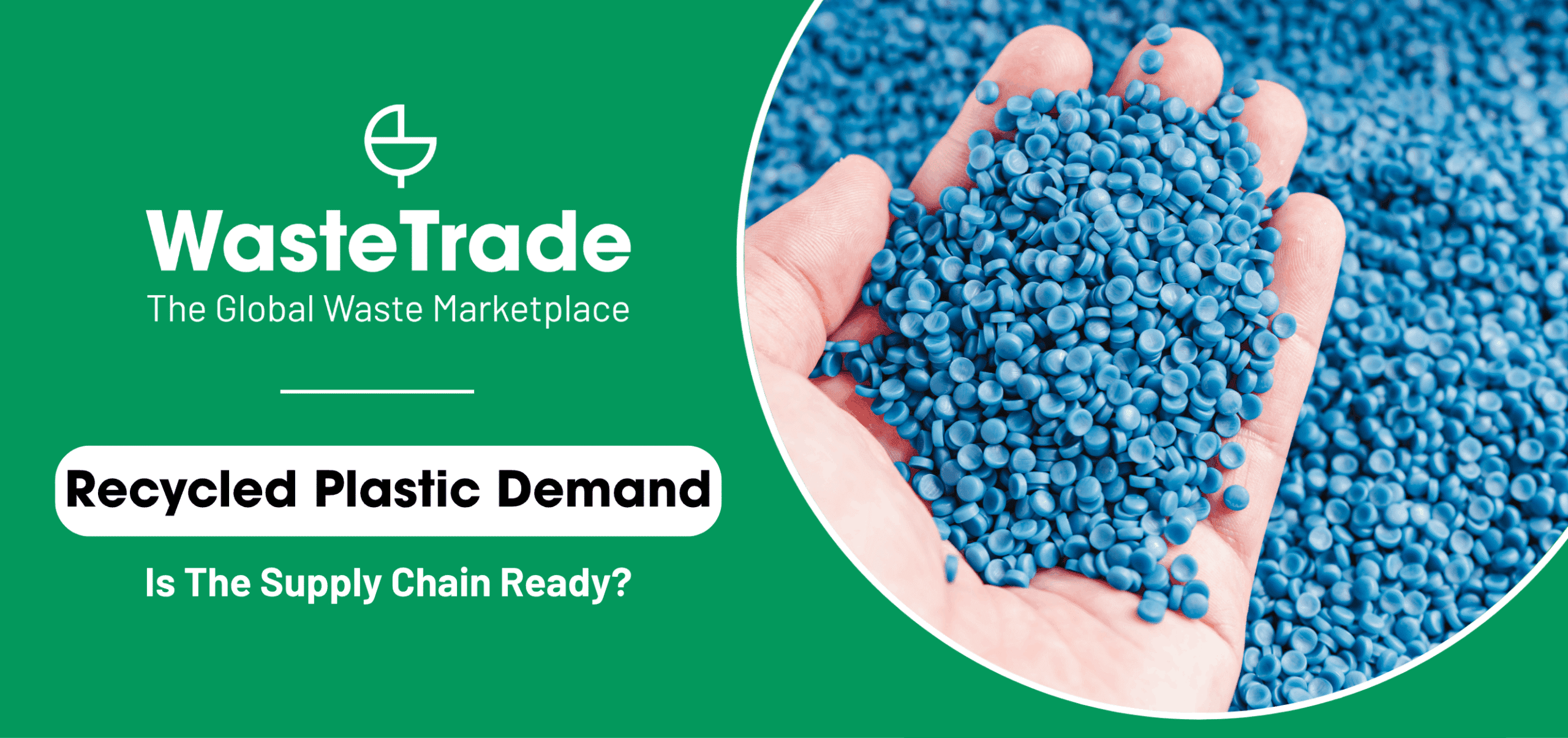
Recycled plastic demand is entering a harder, more serious phase. It is no longer only a question of brand preference, procurement policy or corporate goodwill. Increasingly, it is becoming a matter of legal obligation.
That matters because the recycled plastics market is not strong today. Recyclers face cheap virgin resin, high energy costs, import pressure, weak margins and fragile buyer confidence. Plants have closed. Capacity has been lost. The sector is not short of purpose, but it is short of favourable economics.
WasteTrade’s role matters because of that tension. The market needs a cleaner route between verified recycled plastic supply and the buyers who will soon need that supply with greater urgency.
The Recycled Plastic Market Is Under Strain
Any serious discussion of recycled plastic demand has to start with the present market, not the forecast.
Virgin plastic has often remained cheaper than recycled material, which leaves recycled content exposed whenever buyers return to cost-first procurement. High energy costs have tightened margins further. Imported material has added price pressure. For many recyclers, the problem is not producing material. The problem is selling it at a price that keeps the business viable.
Plastics Recyclers Europe has described the European plastics recycling industry as being in sharp decline, with turnover down and the largest capacity contraction it has recorded. Preliminary 2025 data also pointed to a rise in facility closures and the loss of nearly one million tonnes of European recycling capacity over three years.
That is the context. Recycled plastic demand cannot be discussed as though the market has already turned. It has not.
Why Recycled Plastic Demand Still Points Up
The reason the longer-term picture still looks different is simple. Demand is no longer being left to voluntary commitments alone.
Voluntary targets helped shape the conversation, but they have not protected recyclers from price pressure or guaranteed sufficient demand for recycled polymers. When virgin resin is cheaper, good intentions often lose inside procurement departments.
Mandates change that. Once recycled content becomes a legal requirement, the buyer’s calculation shifts. Recycled plastic stops being a discretionary sustainability choice and becomes part of compliance.
That does not make the market easy. It does not guarantee strong prices overnight. It does, however, create a firmer demand signal than voluntary commitments could provide.
Recycled Content Mandates Are Changing Procurement
The clearest signal already sits in beverage bottles. The EU Single-Use Plastics Directive requires PET beverage bottles to contain 25% recycled plastic from 2025, rising to 30% across all plastic beverage bottles from 2030.
Packaging rules now move the pressure wider. The EU Packaging and Packaging Waste Regulation applies from 12 August 2026 and sets the framework for recyclability, waste reduction, labelling, reuse and recycled content in plastic packaging. Its major recycled-content targets sit further ahead, towards 2030 and 2040, but businesses cannot treat those dates as distant. Supply chains take time to build. Materials need testing. Suppliers need qualification. Documentation needs to be right.
The forthcoming Circular Economy Act points in the same direction. The European Commission says it is due for adoption in 2026 and aims to establish a single market for secondary raw materials, increase high-quality recycled material supply and stimulate demand in the EU.
This is the real shift. Recycled plastic demand is being built into the rules of the market.
The Supply Gap Is the Opportunity
Regulation can create demand. It cannot conjure reliable supply out of nowhere.
Buyers will not simply need “recycled plastic” in the abstract. They will need the right polymer, the right grade, the right quality, the right volume and the right evidence. They will need suppliers who can prove what the material is, where it came from and whether it can meet the buyer’s specification.
A tonne of poorly documented recycled plastic will not carry the same value as material that is clean, consistent, traceable and ready for use in a regulated supply chain.
This is where WasteTrade becomes more than a marketplace listing tool. Its platform gives sellers a structured way to present material to serious buyers. Buyers can search by material type, location, quantity, grade and specification, rather than relying on fragmented contacts or uncertain availability.
Traceability Is Becoming Part of the Product
In the next phase of the market, recycled plastic will compete on more than price.
Quality will matter. Provenance will matter. Documentation will matter. So will the ability to move material through compliant channels without turning every transaction into a bespoke administrative problem.
This is not bureaucracy for its own sake. It is what happens when recycled content becomes part of legal reporting, brand risk and procurement assurance. Buyers need confidence that the material they purchase can support their claims and obligations. Suppliers need to show that confidence before the buyer commits.
WasteTrade’s model fits that requirement. Buyers are accredited and sellers are vetted. Listings can carry the detail buyers need. The platform also supports logistics , compliance and payment security, which are often the points where international waste and recycling trades become slow, uncertain or unworkable. WasteTrade states that its marketplace connects waste generators, recyclers and end users, with accredited buyers, vetted sellers and filtering by precise specifications.
Carbon Visibility Is Now a Trading Issue
The recycled plastics market is also becoming more exposed to carbon scrutiny.
Price still matters, but price alone gives an incomplete picture. Transport distance, material route, processing method and final destination all affect the wider environmental case for a transaction.
WasteTrade’s partnership with ThinkCarbon gives the platform a stronger role here. Carbon footprint visibility helps buyers and sellers understand the impact of a proposed trade before the deal is done. That matters in a market where procurement teams increasingly need to justify decisions on both commercial and environmental grounds.
WasteTrade is therefore not only helping material move. It is helping businesses make better-informed choices about how it moves.
WasteTrade Turns Obligation Into Trade
The law may create recycled plastic demand, but WasteTrade helps make that demand commercially usable.
A packaging producer facing future recycled-content obligations needs more than a policy briefing. It needs material, suppliers, confidence and a way to move from intention to transaction.
A recycler in a weak market needs more than sympathy. It needs access to buyers that value verified, specification-ready material. It needs visibility beyond the same old trading circle.
WasteTrade sits between those needs. It connects vetted recycled supply with accredited buyers, supports listings by useful specifications, helps manage logistics and compliance, and gives both sides greater security around the trade.
That is why the platform matters now. The recycled plastics market is becoming more regulated, more selective and more documentation-led. WasteTrade gives that market a practical trading route.
What Recyclers Need to Do Now
Recyclers should not wait for deadlines to tighten before preparing their material for better buyers.
The work starts with consistency. Cleaner streams, clearer specifications, better documentation and credible information on volume and availability will make recycled plastic easier to sell. Suppliers that can present their material professionally will have an advantage over those relying on loose descriptions and informal relationships.
Listing material on WasteTrade gives recyclers a route to buyers already looking for reliable recycled supply. It also helps position their output before demand becomes more competitive.
What Buyers Need to Do Now
Buyers should not wait until recycled-content obligations become urgent.
The sensible move is to map polymer needs early, identify which packaging or products will require recycled content, test material ahead of time and build supplier relationships before the market tightens.
WasteTrade gives buyers a way to search for suitable recycled plastic supply, compare listings and engage with vetted sellers. That matters because the right material may not be available at short notice once more producers enter the same market with the same legal deadlines.
The Market Will Reward Proof
The present market is painful, and no serious article should pretend otherwise. Closures, weak margins and price pressure will not vanish because regulation points in a better direction.
But the direction is clear. Recycled plastic demand is becoming mandatory, and the next market will reward businesses that can prove quality, provenance, compliance and availability.
WasteTrade gives those businesses a place to be found, assessed and traded with. For recyclers, it offers visibility when the market is difficult. For buyers, it offers a route to the verified recycled plastic supply they will increasingly need.
The demand curve is being written into law. The question now is who will be ready to supply it.